The OpenClaw Threat: 2026's First Major AI Agent Security Crisis
The OpenClaw Threat: 2026's First Major AI Agent Security Crisis
Korede Akinsanya
3/15/20263 min read
The OpenClaw Threat: 2026's First Major AI Agent Security Crisis
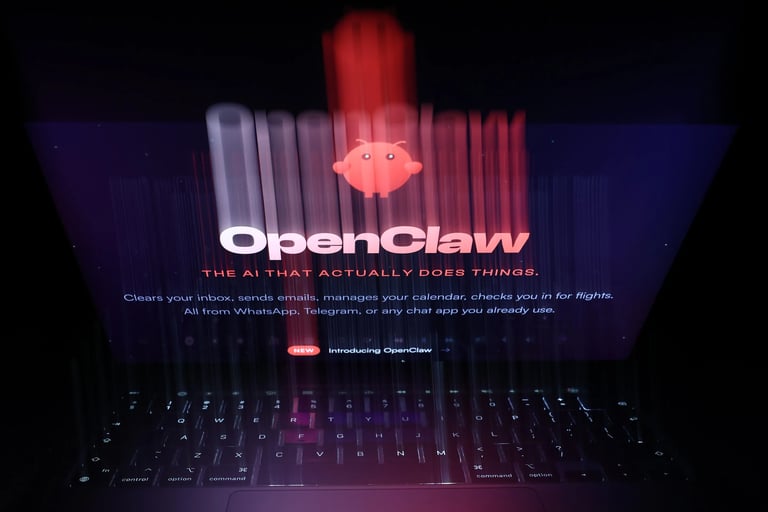
In early 2026, OpenClaw (previously known as Clawdbot and Moltbot) exploded onto the scene as an open-source, self-hosted AI agent framework. Launched in late 2025, it quickly went viral, amassing over 180,000–200,000 GitHub stars in weeks. Developers loved it for its ability to run locally, automate tasks across apps (like email, calendars, browsers, WhatsApp, and Discord), and execute complex workflows with powerful large language models (LLMs). It promised a true personal AI assistant that could "vibe code," manage schedules, generate content, and even build features autonomously.
By March 2026, however, OpenClaw had become synonymous with one of the biggest cybersecurity headaches of the year. What started as a groundbreaking tool turned into a multi-vector threat landscape, drawing warnings from China's National Computer Network Emergency Response Technical Team (CNCERT), security firms like Trend Micro, Kaspersky, and others, and even restrictions in some government and enterprise environments.What Is OpenClaw?OpenClaw is an autonomous AI agent that runs on your machine (or server) with high privileges. It can read/write files, control browsers, interact with APIs, and install "skills" or plugins from marketplaces like ClawHub. This power makes it incredibly useful—but also dangerous when misconfigured or exploited.Its rapid adoption outpaced security measures. Within weeks of virality, attackers exploited its design flaws, weak defaults, and community-driven ecosystem.
Key Threats and Vulnerabilities in March 2026
By March 2026, OpenClaw had accumulated a string of serious issues:
Weak Default Security Configurations — CNCERT issued a stark warning on March 12, 2026, highlighting "extremely weak" defaults. Attackers could embed malicious instructions in web pages or use poisoned plugins to compromise users. China's authorities restricted OpenClaw in state enterprises, banks, and even military families' devices to contain risks.
Ongoing Vulnerabilities and Patches — Early flaws like CVE-2026-25253 (CVSS 8.8, one-click remote code execution via WebSocket hijacking, aka "ClawJacked") allowed malicious sites to silently connect to local agents, steal tokens, and achieve full control—even on localhost-bound setups. Patched quickly, but follow-ups included authentication bypasses (e.g., CVE-2026-28450 in Nostr plugin), multiple critical issues in the Nextcloud Talk plugin (seven CVEs disclosed March 5–6), and more.
Malicious Skills and Supply-Chain Attacks — ClawHub (the skill marketplace) became a vector for malware. Hundreds of poisoned plugins (e.g., 341+ in the "ClawHavoc" campaign) distributed infostealers, crypto wallet drainers, Atomic Stealer (macOS malware), and other payloads. Skills tricked agents into social engineering users (fake dialogs asking for credentials) or directly exfiltrated data.
Exposed Instances — Scans revealed thousands (up to 17,500+ earlier, with ongoing exposures) of internet-facing OpenClaw gateways leaking API keys (OpenAI, Claude, Google AI), tokens, and credentials. Many lacked proper auth, making them easy targets.
Architectural Risks — Agents run with high privileges, process untrusted input, and integrate deeply with systems. This amplifies prompt injection, data exfiltration, and insider-like threats. Experts called it an "absolute nightmare" and "unacceptable risk" for enterprises.
In March, reports continued: new plugin flaws, government warnings, and discussions of OpenClaw as the "biggest insider threat of 2026." While patches rolled out rapidly (e.g., versions like 2026.2.12 fixing dozens of issues), the ecosystem's pace left many users exposed.
Why This Matters: A New Class of Threat
OpenClaw shows how AI agents introduce novel risks:
Agents act as trusted insiders—attackers compromise the agent to trick the user or system.
Supply-chain poisoning hits harder when agents auto-execute code.
Viral open-source tools spread fast, outrunning vetting.
It's not just theoretical—real compromises included data theft, malware distribution, and potential enterprise breaches.
Recommendations and Lessons Learned
If you're using or considering OpenClaw:
Update immediately to the latest version (post-March patches address many issues).
Run in strict sandboxes (Docker with limited privileges, no root access).
Disable unnecessary plugins; vet ClawHub skills carefully.
Use network isolation—avoid exposing gateways publicly.
Monitor for anomalous behavior (e.g., unexpected API calls or file access).
For enterprises: Treat OpenClaw as high-risk; implement governance for agentic identities.
OpenClaw highlights the double-edged sword of agentic AI: immense productivity gains versus unprecedented exposure. As we move deeper into 2026, securing these tools will be as critical as building them.
Stay vigilant—your AI assistant could become your biggest vulnerability.