
The 2010 Stuxnet attack wasn't just a cybersecurity incident—it was the opening shot in a new form of warfare.
The 2010 Stuxnet attack wasn't just a cybersecurity incident—it was the opening shot in a new form of warfare.
KoreWealth
3/7/20263 min read
In the summer of 2010, the cybersecurity world encountered something unprecedented. A piece of malware called Stuxnet emerged—not just another virus stealing data or crashing computers, but a highly sophisticated worm designed to cross the digital divide and cause physical destruction in the real world. Widely regarded as the first true cyberweapon, Stuxnet targeted Iran's nuclear program and forever changed how governments, industries, and security experts view threats to critical infrastructure.
What Exactly Was Stuxnet?
Stuxnet was a computer worm (a self-replicating type of malware) that specifically attacked Supervisory Control and Data Acquisition (SCADA) systems and Programmable Logic Controllers (PLCs) manufactured by Siemens, the German industrial giant. These systems control heavy machinery in factories, power plants, pipelines—and in this case—uranium enrichment facilities.What made Stuxnet revolutionary:
It exploited four zero-day vulnerabilities in Microsoft Windows (unknown flaws that even Microsoft hadn't patched yet).
It used legitimate digital certificates (stolen from companies like Realtek and JMicron) to appear trustworthy and bypass security checks.
It employed rootkit techniques to hide its presence deeply within infected systems.
Most crucially, it contained highly specialized payloads that only activated under very precise conditions—conditions matching the setup at Iran's Natanz uranium enrichment plant.
How Stuxnet Worked: A Multi-Layer Sabotage
Stuxnet operated in careful stages:
Initial Infection — Because the target facility (Natanz) was air-gapped (not connected to the internet), the worm spread primarily via USB drives. An infected USB inserted into a Windows machine would install the malware silently.
Propagation — Once inside, it spread across the local network, looking for machines running Siemens Step7 software (used to program PLCs).
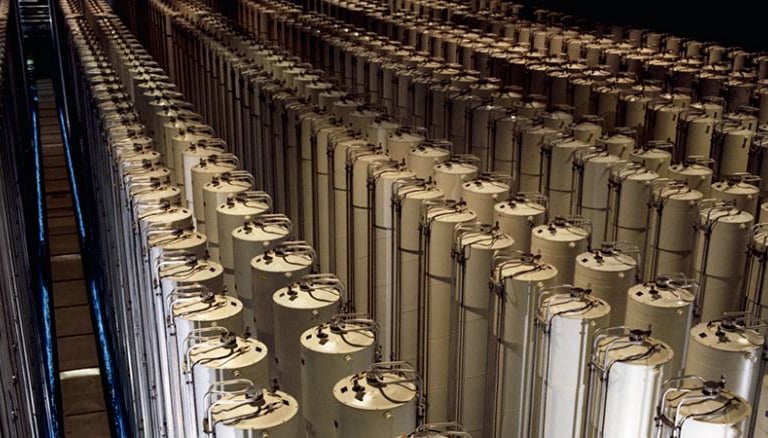
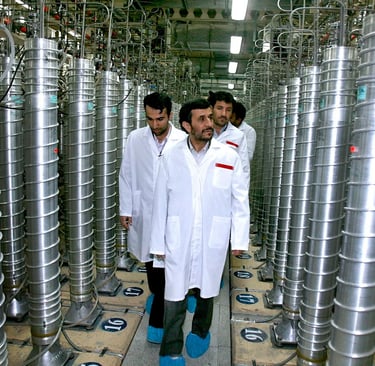
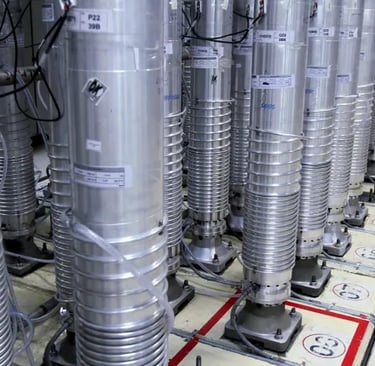
Target Identification — Stuxnet checked for very specific configurations: particular versions of Siemens PLCs connected to frequency converter drives (made by vendors like Vacon in Finland and Fararo Paya in Iran) running at exact speeds used by Iran's IR-1 centrifuges (around 807–1210 Hz).
Sabotage Phase — When it found the match, it intercepted commands to the centrifuges and altered their behavior:
It periodically sped up the centrifuges to destructive speeds (far beyond normal operating ranges).
It simultaneously manipulated sensor readings so operators' control panels showed everything running normally.
Over time, this erratic operation caused the delicate centrifuges to overheat, vibrate excessively, and eventually fail catastrophically.
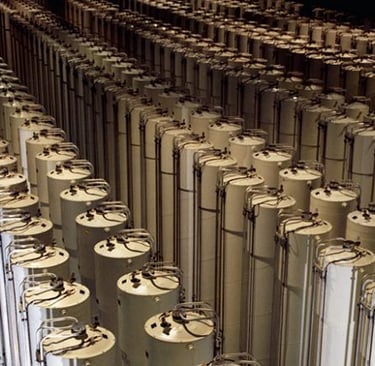
Estimates suggest Stuxnet destroyed around 1,000 centrifuges (roughly 10–20% of Natanz's total at the time), setting Iran's nuclear enrichment program back by 1–2 years according to various intelligence assessments.Timeline of Discovery and Spread
Development likely began around 2005–2007, reportedly as part of a joint U.S.-Israeli program (codenamed Olympic Games).
Early versions appeared as early as 2007–2009.
Infections at Natanz probably started in 2009.
The worm escaped its intended target and began spreading more widely in 2010.
On June 17, 2010, a Belarusian antivirus company called VirusBlokAda (thanks to researcher Sergey Ulasen) first identified unusual behavior on a client's system in Iran—machines rebooting repeatedly.
By July 2010, security firms like Symantec, Kaspersky Lab, and others dissected samples and revealed its sophistication.
In late 2010, Iran publicly acknowledged cyber sabotage had affected centrifuges at Natanz.
Who Was Behind It?
Although neither government has officially confirmed involvement, strong evidence points to a collaborative effort between the United States (NSA/CIA) and Israel (Unit 8200/Mossad). Reports, leaks (including from Edward Snowden-era documents), and even a retirement video for an Israeli military chief have strongly implied responsibility. The level of access to zero-days, stolen certificates, and detailed knowledge of Iran's exact centrifuge setup strongly suggests nation-state resources.
Impact and LegacyStuxnet marked a turning point:
It proved cyber operations could achieve physical destruction without bombs or troops.
It demonstrated that even air-gapped systems are vulnerable via human vectors (USB drives).
It accelerated global awareness of ICS/SCADA vulnerabilities, prompting many countries and companies to reassess industrial cybersecurity.
It opened the era of cyber-physical attacks, inspiring later malware like Duqu, Flame, Shamoon, Triton/Trisis, and others targeting critical infrastructure.
It raised difficult questions about cyber norms, attribution, escalation, and the use of offensive cyber tools in peacetime.
Fifteen years later, Stuxnet remains a landmark—not because it was the most widespread malware (it infected far fewer systems than typical worms), but because it was the most precise, expensive, and geopolitically significant piece of malicious code ever created.
As industrial systems become more connected (via IIoT and Industry 4.0), the lessons from Stuxnet are more relevant than ever: air gaps are not invincible, supply-chain trust can be weaponized, and the boundary between cyberspace and the physical world has effectively disappeared.
The 2010 Stuxnet attack wasn't just a cybersecurity incident—it was the opening shot in a new form of warfare.
The Stuxnet 2010 Attack: The World's First Known Cyberweapon