Global Surge in Mobile Banking Malware: Attackers Hijack Legitimate Apps on Your Phone
In March 2026, Zimperium zLabs dropped a bombshell with its 2026 Banking Heist Report. The findings paint a worrying picture: financial fraud has shifted from bank servers and traditional phishing sites directly onto users' mobile devices.
Korede Joel Akinsanya
3/27/20263 min read
Global Surge in Mobile Banking Malware: Attackers Hijack Legitimate Apps on Your Phone
In March 2026, Zimperium zLabs dropped a bombshell with its 2026 Banking Heist Report. The findings paint a worrying picture: financial fraud has shifted from bank servers and traditional phishing sites directly onto users' mobile devices. Mobile banking apps — once seen as convenient and relatively safe — have become the primary battleground for cybercriminals.
The Scale of the Threat
Zimperium's researchers tracked 34 active malware families throughout 2025. These families targeted 1,243 financial apps (including banking, fintech, and investment apps) across 90 countries. Many of these apps have been downloaded more than three billion times combined, putting hundreds of millions of users at risk.
Key statistics highlight the dramatic escalation:
67% year-over-year increase in Android malware-driven financial transactions.
56% rise in Android banking trojan attacks (corroborated by Kaspersky's independent analysis).
A staggering 271% jump in unique malware installation packages, reaching 255,090 new APK files in 2025 alone.
The United States remains the hardest hit, with 162 banking apps under active targeting — a sharp rise from 109 in 2023. Other regions across Europe, Latin America, Asia, and beyond are also heavily affected as mobile banking adoption continues to grow rapidly.
Dominant Malware Families
Three families stand out as the most aggressive players:
TsarBot
CopyBara
Hook
Together, they account for more than 60% of the targeted banking and fintech apps globally. Other notable threats include evolving variants that incorporate ransomware-like features or device-locking extortion capabilities.
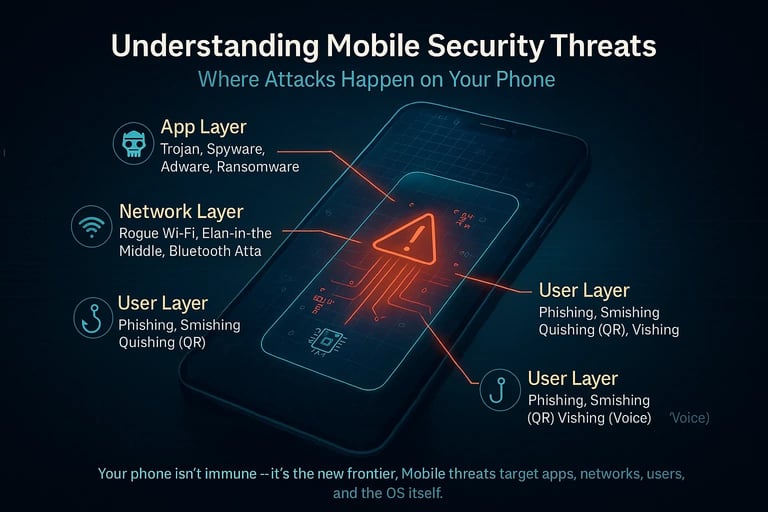
These aren't simple credential stealers anymore. Modern banking trojans have evolved into sophisticated tools that can:
Overlay fake interfaces on legitimate banking apps.
Intercept SMS one-time passwords (OTPs) and 2FA codes.
Record screen activity or inject commands in real time.
Maintain persistence even after security apps attempt removal.
Hide their presence using advanced obfuscation and accessibility service abuse.
How the Attacks Work: Fraud Moves to the Device
Traditional bank defenses focus on server-side monitoring — watching for unusual login locations, large transfers, or suspicious patterns. Mobile banking malware bypasses all of that by operating directly on the victim's phone.
Once installed (often via phishing links, fake apps, malicious IPTV or utility downloads, or compromised websites), the malware waits for the user to open their real banking app. It then hijacks the session, steals credentials in the background, or even performs transactions while the user sees nothing unusual. Some advanced variants use real-time screen streaming or agent-controlled injection, allowing attackers (or automated systems) to act instantly when the victim initiates a payment.
The result? Fraud appears to originate from the legitimate user’s device and authenticated session — making it extremely difficult for banks to detect and block in time.
Why This Surge Is Happening Now
Several factors are fueling the explosion:
Explosive growth in mobile banking usage (over 54% of consumers now rely primarily on apps for daily banking).
Widespread availability of malware-as-a-service and easy-to-customize trojan kits.
Sophisticated social engineering campaigns that trick users into granting dangerous permissions (especially accessibility services).
The relative difficulty of securing the diverse Android ecosystem compared to iOS.
Kaspersky's parallel research echoes Zimperium's warnings, noting that banking trojans are now the fastest-growing mobile malware category, with families like Mamont dominating detections in some regions.
What This Means for Banks and Users
For financial institutions, server-side fraud detection is no longer enough. Banks must invest in client-side app hardening — runtime protection, anti-tampering measures, device risk assessment, and stronger integration with mobile security solutions.For everyday users, the message is clear: your phone is now the weakest link. A single compromised app or careless download can expose your entire financial life.
How to Protect Yourself
Download banking apps only from official stores (Google Play or Apple App Store) and verify developer names.
Avoid sideloading APKs or clicking links from unsolicited messages, even if they appear to come from your bank.
Be extremely cautious with app permissions — never grant "Accessibility" or "Overlay" rights to unknown apps.
Use a reputable mobile security solution with real-time scanning and behavioral detection.
Enable biometric authentication and app-level PINs where possible.
Monitor accounts frequently and set up transaction alerts.
Keep your phone's OS and apps updated to patch known vulnerabilities.
The Road Ahead
Zimperium's report serves as a wake-up call: the era of "set it and forget it" mobile banking security is over. As attackers continue to industrialize these campaigns, both banks and users must adapt quickly. Expect even more sophisticated threats in 2026, including greater use of AI for evasion and real-time fraud execution.
The full 2026 Mobile Banking Heist Report is available for download from Zimperium (free registration required). It includes deeper technical analysis and recommendations for organizations.
Stay vigilant — in mobile banking, the battle is happening on your device.